Before removing a tree in Miami-Dade County, it’s essential to understand and follow the local regulations to avoid fines and ensure environmental responsibility. Many tree species are protected under county ordinances, especially those native to South Florida or of significant size. The first step is to identify the type of tree and measure its trunk diameter at breast height (DBH), as this will determine whether a permit is required. In most cases, a permit from the Miami-Dade Division of Environmental Resources Management (DERM) is needed before removal. If the tree is dead, diseased, poses a safety hazard, or is listed as invasive, you may qualify for a permit exemption—but proper documentation, such as photos or a report from a certified arborist, is recommended. Additionally, always inspect the area for nearby structures, underground utilities, or overhead power lines, and consult with a licensed and insured tree service professional to ensure the removal is done safely and legally.
1. Check If You Need a Permit
Many cities and unincorporated areas within Miami-Dade County require a permit before removing a tree, especially for larger or protected species. Rules vary by municipality, so it’s worth confirming with your local building department — or letting your tree service handle the paperwork for you.
2. Confirm Property Lines
Trees near a property line can cause disputes if ownership isn’t clear. Take a moment to confirm whose tree it actually is, and if it’s shared or a neighbor’s, have that conversation before work begins.
- Check your property survey or plat map
- Look for HOA rules on tree removal
- Photograph the tree and surrounding area beforehand
3. Watch for Utility Lines
South Florida’s overhead and underground utility lines mean removal crews need to plan rigging and drop zones carefully. A licensed, insured company will call in utility locates and use the right equipment to avoid damage or outages.
“The biggest mistakes we see aren’t from the removal itself — they’re from skipping the planning that happens before the chainsaw ever starts.”
4. Hire a Licensed & Insured Company
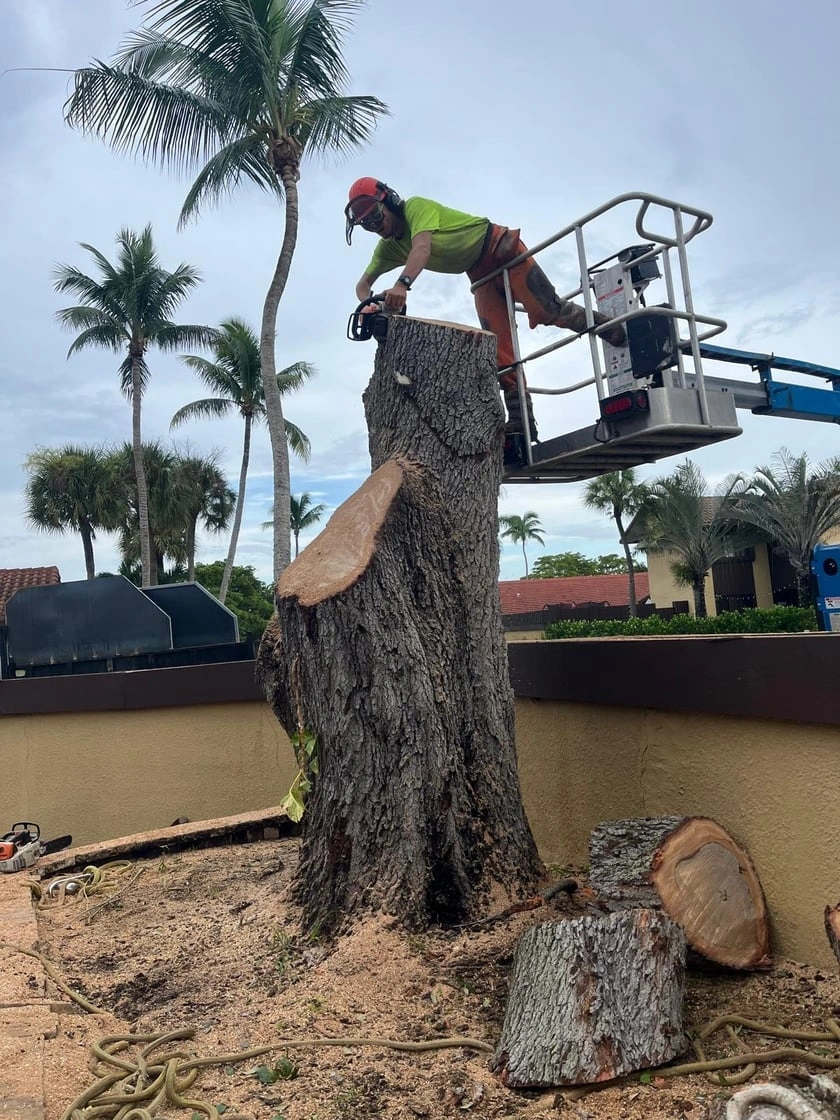
Tree removal is dangerous work. Always confirm that your tree service is licensed and carries liability and workers’ comp insurance — that protects your property and you from liability if something goes wrong on the job.
5. Plan for Cleanup
Ask up front whether stump grinding, debris hauling, and yard cleanup are included in your estimate. A reputable company will leave your property cleaner than they found it — no lingering branches, sawdust piles, or damaged grass.
If you’re planning a tree removal anywhere in Miami-Dade, OnTop Tree Service can walk you through permits, safety, and cost before any work begins — with a clear, honest estimate every time.